
Storage
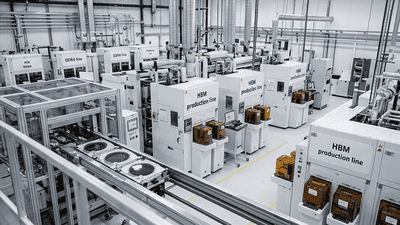
HBM’s Crowding-Out Effect on DDR4 Supply: The Legacy Memory Shortage
The memory market has developed an uncomfortable contradiction: the technology manufacturers are eager to leave behind can become the product customers struggle hardest to replace. DDR4 is no longer the preferred destination for much of the industry’s new investment, yet a substantial installed base still depends on it.

NAND Flash Price Trajectory in 2026: Why Enterprise SSDs Outperform Consumer
The NAND market in 2026 is not following one uniform recovery curve. Enterprise storage is benefiting from expanding data-center requirements, while consumer storage faces a different purchasing environment: higher component costs, more cautious procurement, and greater resistance to passing those costs through to end users.
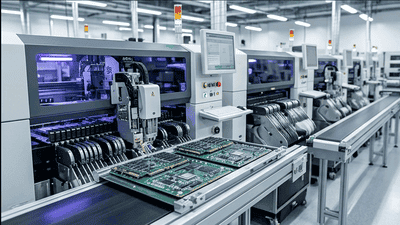
CXL Memory Module Commercialization: The Next Storage Architecture Shift
A server can run out of memory capacity long before it runs out of processing capability. Another can carry expensive DRAM that its applications rarely use. Both situations expose the same architectural limitation: memory has traditionally been purchased, installed, and managed closely around individual processors and systems.

QLC and PLC NAND Capacity Allocation: The Cost-Per-Bit Race
The NAND industry has two ways to increase storage density: build more memory cells into a given footprint, or store more information in each cell. Three-dimensional architectures pursue the first route through vertical stacking and layout improvements. QLC and PLC pursue the second by increasing the number of bits represented within a cell.
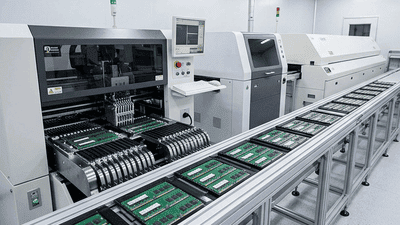
CXMT’s DDR5 Production Ramp: China’s DRAM Self-Sufficiency Progress
China’s progress toward a more self-sufficient memory supply chain is increasingly being tested in production rather than in product announcements. For ChangXin Memory Technologies, better known as CXMT, DDR5 is a particularly important proving ground. It moves the company further into the memory requirements of contemporary PCs, workstations, and servers while challenging it to deliver consistent performance at commercial scale.
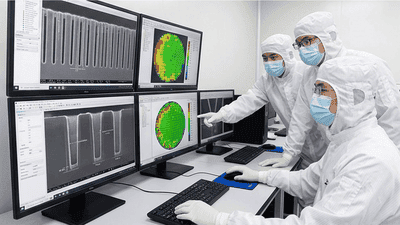
YMTC’s 294-Layer 3D NAND: The Domestic NAND Capacity Milestone
YMTC’s progress in three-dimensional NAND is important for more than the layer-count contest. It represents an effort to convert domestic semiconductor engineering into usable storage supply: chips that can enter qualified products, support customer deployments, and generate repeatable manufacturing output.
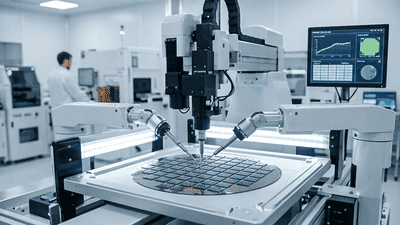
Enterprise SSD Demand from AI Databases: The Local LLM Storage Driver
The next enterprise-storage opportunity is not limited to enormous model-training clusters. It is also emerging inside organizations that want to run language models close to their own data: within a private cloud, an on-premises data center, or a controlled departmental environment.

DDR5 Server DRAM Supply Gap Through 2027: The AI Server Memory Configuration Math
The server-memory shortage is not explained by counting AI accelerators alone. It is also a configuration problem: how many host systems are deployed, how much working memory each requires, which modules are qualified, and how quickly manufacturers can deliver the appropriate mix.
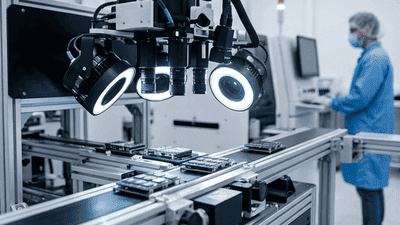
Kioxia’s 45x Profit Jump: NAND Price Surge and Enterprise SSD Demand
Kioxia’s latest profit surge illustrates what happens when higher semiconductor prices meet a manufacturing business with substantial operating leverage. Stronger demand improves revenue, while a large portion of the resulting gain can reach profit if production costs do not rise at the same pace.

Samsung’s Memory Revenue Up 471%: Deconstructing the AI Storage Windfall
Samsung’s memory business is benefiting from a powerful combination: rising selling prices, stronger server demand, and a product mix increasingly shaped by AI infrastructure. The result is a revenue and profit expansion that is changing how investors evaluate an industry traditionally associated with steep cycles.