The memory market has developed an uncomfortable contradiction: the technology manufacturers are eager to leave behind can become the product customers struggle hardest to replace. DDR4 is no longer the preferred destination for much of the industry’s new investment, yet a substantial installed base still depends on it.

At the same time, AI infrastructure is encouraging suppliers to prioritize high-bandwidth memory, advanced server DRAM, and newer process technologies. The result is not simply strong demand for HBM. It is a widening gap between the pace at which producers reduce legacy support and the pace at which customers can migrate.
The key concept is allocation. HBM’s influence reaches DDR4 through investment priorities, production planning, engineering resources, and the broader transition toward DDR5. The shortage is real in selected products and channels, but its causes are more complex than claiming that every HBM wafer directly replaces a DDR4 wafer.
The Legacy Shortage Starts with Uneven Transitions
Memory manufacturers and their customers operate on different timelines. Suppliers pursue products that justify technology development and capital expenditure. Customers maintain systems whose economics depend on reliability, compatibility, and useful life.
A server, industrial controller, or embedded platform can remain commercially valuable after its memory generation becomes less attractive to producers.
That creates the basic imbalance. Demand for DDR4 can decline while supply falls faster. A shrinking market does not necessarily become an easy market to buy from.
For a procurement manager, the problem is immediate: the approved part must remain available. For an investor, the important question is whether that imbalance supports durable earnings or only a temporary price spike during the transition.
HBM Is Part of the Cause, Not the Whole Explanation
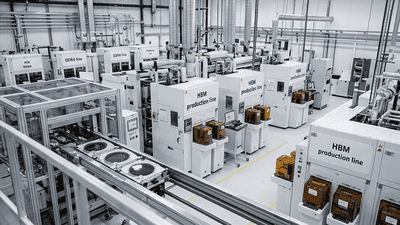
HBM serves bandwidth-intensive applications through stacked memory structures. Its manufacturing and integration requirements differ from those of conventional memory modules.
Strong demand encourages producers to devote more resources to it. However, the physical relationship between HBM and DDR4 production is not a universal one-for-one exchange.
The effect can be indirect. Manufacturers may prioritize advanced DRAM capacity, redirect investment, reduce development attention to older products, or accelerate the transition toward newer mainstream memory.
The DDR4 squeeze therefore reflects several forces operating together: product lifecycle decisions, capacity allocation, customer purchasing, and the growing commercial importance of AI-oriented memory. Treating HBM as the only cause obscures the transition mechanics.
DDR5 Is the Bridge in the Crowding-Out Story
DDR5 provides the newer mainstream platform for many server and client applications. Suppliers have reasons to expand its qualified output even without an HBM boom.
HBM demand adds another priority within the DRAM portfolio. That can make manufacturers less willing to preserve or restore broad legacy production merely because DDR4 prices rise.
The relationship is therefore layered: DDR4 competes with a migration toward DDR5, while DDR5 and other advanced products compete for investment and production attention with HBM.
For analysts, this is a better framework than assuming all DRAM capacity is immediately interchangeable. Process technology, equipment, yields, and product qualification determine how flexibly manufacturers can respond.
DDR4 Has Not Disappeared Everywhere

Lifecycle plans vary by supplier, product, and customer arrangement. An end-of-life notice for one configuration does not mean the entire DDR4 category has stopped shipping.
Reported production extensions and selective adjustments have coexisted with plans to reduce legacy output. The important distinction is between continued production and continued availability for every buyer. Existing output can be committed to particular customers.
This is why procurement teams need product-level information rather than a broad statement that DDR4 is either “finished” or “safe through 2026.”
They should identify the exact part, supplier notice, order conditions, and support horizon. Category-level commentary can explain the environment, but it cannot establish the availability of a specific approved component.
Alternative Suppliers Can Gain Opportunity
Reduced legacy emphasis by larger producers can create an opening for suppliers with relevant capacity and qualified products.
In May 2026, reporting on Nanya described significant DDR4 and LPDDR4 supply gaps and customer interest in contracts extending as long as three years. It also indicated that persistent legacy demand was influencing the company’s pace of transition toward newer products. These were company-specific observations, not proof of uniform conditions across all suppliers.
The commercial opportunity is clear: a supplier serving an overlooked product can gain pricing power and customer attention.
The execution challenge remains equally important. Customers need compatible, reliable components, and suppliers need enough confidence in future demand to justify continued investment.
Qualification Limits How Quickly Buyers Can Switch

Two memory components with similar headline capacity are not automatically interchangeable in every system. Organization, speed, electrical characteristics, packaging, and platform support can influence suitability.
Enterprise and industrial customers may need to evaluate a replacement before introducing it into production or maintenance stock.
That work can take time, especially when a system has strict reliability requirements or limited engineering resources available for redesign.
For a buyer, the value of an alternative supplier depends on completed qualification. For a seller, the opportunity depends on proving performance in the customer’s application. An available part becomes useful supply only when it can actually be deployed.
The Module Market Adds Another Layer
Most users purchase modules rather than individual DRAM components. Module availability depends on component sourcing, assembly, testing, configuration, and compatibility with the intended system.
A shortage in one approved component can constrain a particular module even when related DRAM remains available.
Conversely, module makers may hold inventory that temporarily cushions a change in upstream supply. That can delay the point at which users experience the problem.
For market analysis, component quotations and finished-module prices should remain distinct. Their movements can be related, but they describe different transactions and can respond on different schedules.
Why Older Memory Can Become More Expensive
Technology age does not guarantee a low price. If available supply becomes scarce while customers remain unable to substitute, an older product can command a premium.
That premium reflects availability and compatibility rather than superior performance. A buyer may pay more to keep an existing platform operating instead of replacing the system.
However, comparisons need matched configurations. DDR4 and DDR5 modules can differ in capacity, organization, qualification, and commercial terms.
For an investor, rising legacy prices can support near-term earnings. The longer-term question is whether customers eventually migrate, whether alternative supply expands, and whether the supplier can maintain attractive economics after the acute shortage eases.
Inventory Can Magnify the Imbalance
When buyers fear future unavailability, they may bring purchases forward. Distributors and system builders can also increase buffers.
That behavior can tighten accessible supply beyond what current consumption alone would imply. It is understandable risk management, but it changes the apparent demand signal.
Later, customers may use accumulated inventory and reduce new orders without a comparable fall in system activity.
For analysts, the location of inventory matters. Producer stocks, distributor holdings, module inventories, and customer spare parts can move differently. A shortage narrative is stronger when supported by evidence of consumption rather than purchasing alone.
Enterprise Buyers Face a Platform Decision
A DDR4 shortage can encourage organizations to consider migration, but DDR5 is not a drop-in replacement for every DDR4 system. Platform compatibility determines what is possible.
The decision can therefore extend beyond memory procurement to processors, boards, software validation, and deployment planning.
A business may rationally continue purchasing expensive legacy memory if replacement costs or operational disruption are greater. Another may find that the shortage accelerates an already planned refresh.
From a data-center manager’s perspective, the right comparison is total operating and transition cost. The cheapest memory generation in isolation may not produce the least expensive system outcome.
Industrial Demand Can Outlast Consumer Demand
Industrial and embedded products often remain in service for long periods. Their customers may prioritize continuity and approved configurations over frequent technology upgrades.
That creates a legacy-demand tail that can persist after consumer platforms move on.
For suppliers, the market can be attractive but fragmented. Specific capacities and configurations may require continued support even when total demand is declining.
For customers, lifecycle planning becomes essential. Long-term requirements should be connected to realistic consumption forecasts, qualified alternatives, and storage practices rather than handled only when the next purchase becomes urgent.
The NAND Connection Is Indirect
HBM and DDR4 are DRAM products. NAND flash uses a different memory technology and should not be described as directly losing one wafer for every HBM wafer added.
Companies operating both businesses make capital and engineering decisions across their portfolios, creating an indirect connection through corporate priorities.
Enterprise storage also depends on more than NAND. Controllers, firmware, and—in many designs—working memory contribute to the finished product.
Any DDR4-related exposure needs to be identified at that product level. It would be misleading to claim that every SSD requires DDR4 or that a legacy DRAM shortage automatically creates an equivalent enterprise-drive shortage.
Storage Systems Can Feel the Pressure Through Their Bill of Materials
A storage appliance or server can contain several memory technologies across its host platform, controllers, and drives. A constrained component can affect the complete system’s delivery.
This makes bill-of-material visibility useful. Procurement teams need to know which products depend on a legacy part and which have qualified alternatives.
For storage vendors, a component problem can become a scheduling or configuration issue even when NAND supply is adequate.
For investors, the important distinction is between flash-market conditions and finished-system availability. The two can diverge because the complete product requires every essential component, not just abundant storage bits.
What Buyers Can Do Without Overreacting
A practical response begins with accurate exposure mapping.
- Identify the exact DDR4 parts and modules required by each platform.
- Confirm supplier lifecycle notices and delivery commitments directly.
- Qualify alternatives before an urgent replacement is needed.
- Size inventory around realistic consumption and operational risk.
- Compare continued support with the complete cost of migration.
- Review procurement authenticity, traceability, and testing requirements.
These steps do not eliminate supply risk. They reduce the likelihood that broad market anxiety leads to inappropriate purchases or buffers that cannot be used.
What Investors Should Monitor
The useful signals combine price, supply, and customer behavior. Contract renewals and repeat orders can reveal whether legacy demand remains commercially important.
Actual qualified output matters more than nominal capacity. Manufacturing yield, customer acceptance, and available allocation determine how much supply reaches the market.
Migration rates matter as well. Higher prices can improve supplier earnings while encouraging customers to leave the product category.
A strong legacy-memory investment case therefore needs more than a shortage headline. It needs evidence that the supplier can serve persistent demand profitably without overinvesting in a market whose long-term volume is shrinking.
Three Possible Outcomes for the Legacy Market
A prolonged-tightness scenario occurs if large suppliers reduce output faster than customers migrate and alternatives remain limited.
A selective-relief scenario emerges if other producers expand qualified supply, while some configurations remain difficult to obtain.
A rebalancing scenario involves faster customer migration or sufficient new availability to moderate pricing and delivery pressure.
These scenarios can coexist across different DDR4 products. The market does not need to follow one uniform path. That is why specification-level evidence remains more useful than predictions about the entire generation.
The Shortage Is a Transition Problem with an AI Accelerator
HBM’s rise is changing the commercial priorities of DRAM manufacturing. It strengthens the incentive to invest in advanced products while customers continue operating platforms that depend on legacy memory.
But DDR4 tightness also reflects the transition to DDR5, product lifecycle decisions, qualification limits, and inventory behavior. The mechanism is broader than a direct wafer swap.
The lasting lesson is that demand can decline without availability improving. For buyers, resilience comes from qualified options and planned migration. For investors, opportunity comes from distinguishing temporary scarcity from a sustainable business.