
Storage
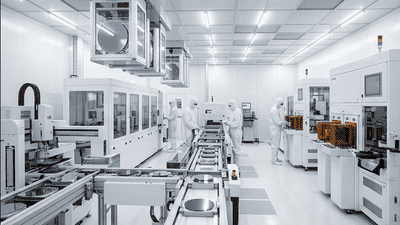
DRAM ETF Holdings Concentration: The Risk Behind the 73% Three-Stock Bet
A memory-focused ETF can provide convenient access to an industry whose products sit at the center of servers, AI infrastructure, smartphones, and enterprise storage. It can also create the impression of diversification without spreading the underlying economic risk very far.
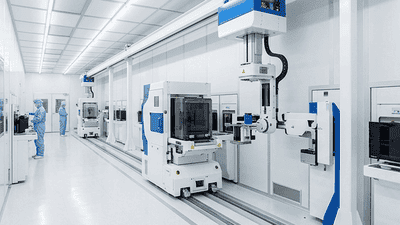
Micron’s Completed PSMC Acquisition: The Taiwan DRAM Capacity Timeline
Micron’s completed Taiwan transaction gives the company an important asset in the race to expand memory production: an existing manufacturing site that can be adapted rather than built entirely from the ground up. But ownership is only the first milestone. The commercial value depends on retrofitting, equipment installation, process qualification, and the pace at which the facility produces accepted products.

Roundhill DRAM ETF’s $10B in 50 Days: The Fastest Thematic ETF Launch Ever
A narrowly focused memory fund became one of the most striking ETF launch stories of 2026. Investors were looking beyond processors and asking a different AI question: which companies supply the memory and storage that advanced computing systems cannot operate without?
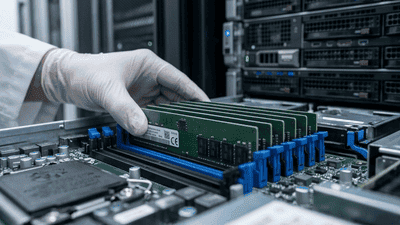
SK Hynix Q2 DRAM ASP Up 30%: The AI Server Demand Curve
SK hynix’s second-quarter DRAM pricing tells a broader story than the success of high-bandwidth memory alone. The company reported that DRAM average selling prices rose approximately 30% sequentially in the April–June 2026 quarter, with management attributing the increase primarily to continued strength in conventional DRAM. DRAM bit shipments increased by a high-single-digit percentage.
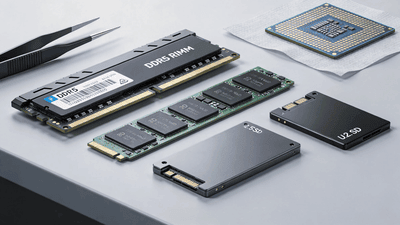
Memory Inventory Days and Stock Price Lead-Lag: The 2026 Signal
Memory inventories and memory stocks rarely turn at the same moment. A share price can recover while reported inventory remains elevated, or weaken while manufacturers are still announcing strong sales. That apparent contradiction is often the most useful part of the signal: financial markets price expectations, while quarterly accounts describe conditions that have already developed.
NAND Layer Count Race: Kioxia’s 332-Layer BiCS10 Sample Delivery
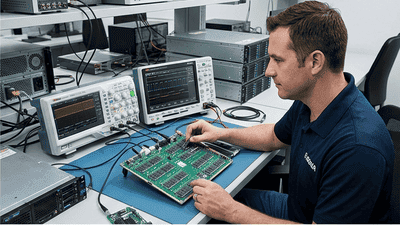
Kioxia’s 332-layer BiCS10 NAND marks a meaningful step in the race to build denser, faster, and more power-efficient flash memory. Yet the most important word in the announcement is not “332.” It is “samples.” The technology has reached functional evaluation, while its commercial significance still depends on manufacturing execution and integration into qualified storage products.

Server DRAM vs. Mobile DRAM Price Divergence: Arbitrage Opportunity Analysis
The DRAM market is never perfectly synchronized. Even though server DRAM and mobile DRAM share common manufacturing roots, their price trajectories often diverge because each segment is driven by different demand cycles, product mixes, and strategic priorities. When that divergence becomes pronounced, it naturally raises the question: is there an arbitrage opportunity? Can manufacturers, module houses, or even investors exploit pricing gaps between server and mobile DRAM in a systematic way?
Shortages in DDR5 PMIC and SPD Hub Supply Chain
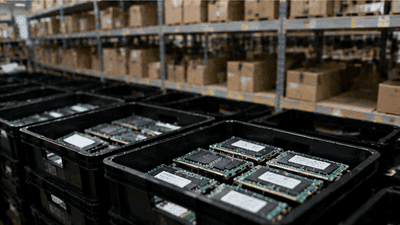
The transition to DDR5 has introduced not only new performance levels for memory systems but also new complexities in the component supply chain. Among the most critical changes are the introduction of on‑DIMM power management ICs (PMICs) and dedicated SPD hubs, both of which are essential for DDR5 modules to function correctly. As demand for DDR5‑based platforms accelerates, shortages in these components have emerged as a key bottleneck, impacting module makers, OEMs, and data center planners alike.
NAND Makers Shift from Production Cuts to QLC/PLC Capacity Allocation
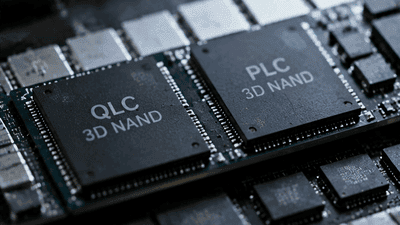
After several years of responding to weak pricing and oversupply with production cuts, NAND flash manufacturers are pivoting to a different playbook. Instead of simply dialing back wafer input, they are reallocating capacity toward higher‑density technologies such as QLC (quad‑level cell) and PLC (penta‑level cell). This strategic shift reflects a maturing market in which the main lever is no longer how many bits to produce, but what kind of bits to make and for which segments.

Memory Inventory Digestion Nearing End, Channel Restocking Intentions Strengthen
As the memory cycle of the early–mid 2020s unfolds, one phrase is increasingly heard in industry discussions: the “inventory digest” is nearing its end. For DRAM and NAND makers, module houses, and downstream OEMs, this signals a turning point from prolonged destocking toward a new phase of restocking and channel “restacking.” At the same time, the strength of that restacking intent—how aggressively the supply chain rebuilds inventory and reshapes product mix—will determine the character of the next leg of the memory cycle, from pricing behavior to technology adoption.