A server can run out of memory capacity long before it runs out of processing capability. Another can carry expensive DRAM that its applications rarely use. Both situations expose the same architectural limitation: memory has traditionally been purchased, installed, and managed closely around individual processors and systems.

Compute Express Link, or CXL, offers a different approach. It enables compatible systems to access additional memory through a standardized connection, creating opportunities for expansion, tiering, and, with suitable infrastructure, pooling across hosts.
The title describes an architecture shift, but an important distinction comes first: a CXL memory module is not automatically a storage device. Commercial DRAM-based products generally provide volatile memory. Their significance lies in changing how the memory tier interacts with DDR5 and NAND-based enterprise storage. The central opportunity is flexibility—provided that hardware, software, and workload economics align.
What CXL Adds to the Server
CXL uses the PCI Express physical connection while introducing protocols designed for interactions between processors, accelerators, and memory devices. Memory-expansion products commonly use the Type 3 device model.
For a compatible host, this creates a route to memory capacity beyond the conventional processor-attached DIMM arrangement. The additional memory can become part of the system’s addressable resources, subject to platform support and configuration.
That does not make the connection equivalent to an ordinary DDR5 memory channel. Controllers, links, and the path between processor and memory affect latency and bandwidth.
From an application’s perspective, the practical question is whether the additional capacity improves useful performance enough to justify those differences. CXL creates an option; it does not guarantee a benefit for every workload.
Commercial Products Have Moved Beyond the Concept Stage
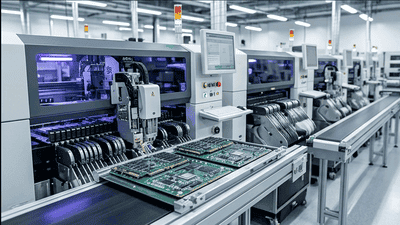
CXL memory expansion is no longer only a standards discussion. Suppliers have introduced modules, development platforms, and products intended for evaluation and deployment through server ecosystems.
Micron’s CZ120 announcement, for example, introduced 128GB and 256GB CXL 2.0 Type 3 modules using a PCIe Gen5 x8 connection and an E3.S form factor. Samsung’s CMM-D portfolio also includes DDR5-based expansion products. These examples demonstrate concrete product development, not universal compatibility or adoption across data centers.
The next commercialization step is integration. A module needs an appropriate host, firmware, operating-system support, and a deployment plan.
For investors, availability of a component is an important milestone. Repeat production purchases and sustained application use provide stronger evidence of an established market.
DDR5 and CXL Are Complementary Technologies
DDR5 describes a DRAM interface and associated memory technology. CXL describes a connection and protocol framework through which a host can access resources, including memory.
A CXL module can therefore contain DDR5 DRAM. It is not necessarily a competitor to DDR5 at the semiconductor level.
The distinction is between where memory sits and how the processor reaches it. Local DIMMs use the processor’s conventional memory channels; a CXL expansion device adds another path.
For a memory manufacturer, commercialization can broaden the ways its DRAM reaches customers. For a system designer, the challenge is balancing local and expanded capacity without treating both paths as identical in performance.
Expansion Is the Simplest Starting Point

The most straightforward CXL application is adding capacity to a compatible server. This can be attractive when a workload needs more memory than the existing configuration provides economically.
A database, analytical task, or virtualized environment may benefit from keeping a larger working set in memory. Avoiding an otherwise necessary move to a slower tier can justify some additional access latency.
However, the benefit depends on the workload. An application already constrained by memory bandwidth or sensitive to every access delay may respond differently.
From a server buyer’s perspective, expansion should be tested against the actual constraint. More capacity is useful when capacity is the problem—not merely because the module can be installed.
Pooling Is a Separate, More Demanding Proposition
Memory pooling allows resources to be allocated across hosts through suitable switching, management, and platform support. It addresses the problem of capacity being stranded in one server while another needs more.
Pooling should not be confused with unrestricted simultaneous sharing of the same memory region. Allocation, access control, coherency, and supported operating models need explicit attention.
A direct-attached expansion module also does not create a multi-host pool by itself. The surrounding infrastructure determines what is possible.
For operators, this means adoption can proceed in stages. Expansion may be practical before a more elaborate pooled architecture. Treating all CXL capabilities as immediately available in every product would overstate commercialization readiness.
The Opportunity Is Reducing Stranded Capacity
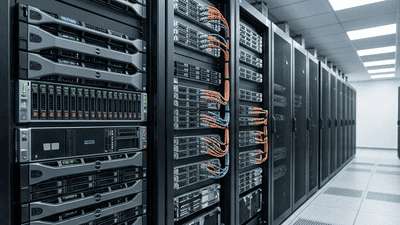
Traditional server provisioning often includes memory headroom for expected peaks. Across many systems, that can leave capacity underused while remaining unavailable to other workloads.
A more flexible allocation model could improve utilization. But the savings depend on how workloads vary and whether memory can be reassigned efficiently without creating unacceptable operating risk.
If every server needs its peak capacity at the same time, pooling provides less relief. If requirements differ across applications and periods, the opportunity can be greater.
For a financial analyst, the relevant question is not the theoretical size of the pool. It is how much purchased capacity the operator can avoid while maintaining the required service level.
Memory Tiering Makes Placement Important
A system using local and CXL-attached memory has resources with different performance characteristics. Software needs to place data appropriately.
Frequently accessed or latency-sensitive information may benefit from local memory, while less active data can use a capacity-oriented tier. The correct policy depends on the application and platform.
Poor placement can undermine the value of additional memory. Good placement can make the architectural trade-off worthwhile without requiring every byte to receive identical access performance.
From an engineering perspective, this makes software support central to commercialization. The module’s specifications establish potential; allocation and migration policies determine how effectively the workload uses it.
Latency Is a Trade-Off, Not an Automatic Disqualification
CXL memory access generally involves a different path from local DRAM, so it should not be assumed to provide the same latency.
That difference can matter substantially to some applications. It can be less important where additional capacity avoids a much slower storage access or enables a larger useful working set.
The right comparison is therefore workload-specific. Comparing CXL only with local DRAM can miss the alternative the customer would otherwise use.
For buyers, realistic testing should include both performance and capacity effects. A slightly slower memory tier can still improve overall application behavior if the system’s original problem was insufficient memory.
Bandwidth Needs a System-Level View
A CXL module can provide another route for data movement, but its usable bandwidth depends on link configuration, controller behavior, access patterns, and the host.
Adding nominal bandwidth figures across interfaces does not guarantee that an application can use the total effectively. Contention and software behavior can affect the result.
The same caution applies to comparing products. Different PCIe generations, lane counts, and measurement conditions can produce different headline specifications.
For an investor, the commercially meaningful evidence is measured improvement in relevant applications. A faster interface strengthens a product only when the complete platform can convert it into useful performance.
NAND Remains the Persistent Storage Foundation
DRAM-based CXL memory does not automatically preserve data when power is removed. Enterprise SSDs remain important for persistent storage, recovery, and durable datasets.
CXL can change the balance between tiers, but it does not erase their different responsibilities. More addressable memory may reduce selected storage accesses while leaving the underlying persistent-capacity requirement intact.
Some technology programs explore flash-backed or hybrid CXL approaches. Those should be distinguished from conventional DRAM expansion products and from mainstream NVMe SSDs.
For analysts, the essential rule is to identify the actual media and product behavior. The presence of a CXL connection alone does not establish persistence, endurance, or equivalence to DRAM.
Flash-Based CXL Concepts Need Their Own Evaluation
A NAND-based device accessed through memory-oriented mechanisms faces different constraints from a DRAM module. Read behavior, writes, endurance, and data management need careful treatment.
The interface cannot remove the underlying characteristics of the storage medium. Controllers and software may manage those differences, but the resulting product still needs a defined application.
This creates a potentially interesting capacity tier rather than a universal replacement for working memory.
For investors, emerging flash-backed designs represent optionality, not proof of near-term displacement of DDR5 or enterprise SSDs. Commercial significance requires demonstrated products, qualification, and recurring customer deployment.
Enterprise Storage Economics Could Change Indirectly
Additional memory can affect caching, database working sets, and how often applications access storage. That can change performance requirements or the design of a storage system.
However, the effect is not necessarily a reduction in SSD demand. Better application capability can support more activity, while persistent datasets continue to grow.
The architecture can also change where spending occurs: memory capacity, storage performance, processors, and software may be balanced differently.
For a data-center operator, the objective is total system efficiency. For an investor, the opportunity should be assessed across that spending mix rather than framed as a simple contest in which one component category wins everything.
Reliability and Operations Become More Complex
Expanding or pooling memory adds resources that the operating environment must monitor and manage. Error reporting, isolation, recovery, and maintenance need to work within the chosen architecture.
A shared infrastructure can also create different failure boundaries from memory installed independently in each server.
These considerations do not make CXL unsuitable. They make operational design part of the qualification process.
From an enterprise buyer’s perspective, performance gains need to coexist with predictable serviceability. From a vendor’s perspective, support quality can become a differentiator as customers move from evaluation systems to production environments.
Commercialization Requires an Ecosystem
A successful deployment depends on more than a memory supplier. Processor platforms, server manufacturers, firmware, operating systems, switching, and management software all contribute.
Compatibility needs to be verified at the platform level. A module supporting a particular standard version does not guarantee that every server exposes all the associated capabilities.
This can slow adoption even when the hardware is available. It can also create opportunities for companies that provide validated combinations and effective integration support.
For investors, ecosystem readiness is therefore a commercial indicator. Product launches matter more when customers can obtain a complete, supported deployment rather than assemble experimental pieces themselves.
The Business Case Must Include All Added Costs
CXL can improve capacity flexibility, but modules, controllers, switches, links, power, and management introduce costs of their own.
A valid comparison includes those expenses alongside any avoided DIMM purchases, server additions, or application penalties.
The opportunity can be strongest where memory capacity constrains useful work or where uneven utilization is costly. It may be less compelling for workloads already served efficiently by a conventional configuration.
The purchasing decision should therefore use cost per useful outcome. A lower price per expanded gigabyte is not sufficient if performance, complexity, or operating overhead offsets the saving.
What to Watch as the Market Develops
The most informative indicators distinguish development activity from sustained commercial use.
- Track validated server platforms and supported module configurations.
- Separate direct expansion from pooling and shared-memory capabilities.
- Look for repeat deployments and workload-specific performance evidence.
- Examine software readiness and operating requirements.
- Distinguish DRAM products from flash-backed concepts.
- Evaluate total cost, reliability, and utilization alongside capacity.
These measures provide a stronger commercialization framework than broad market forecasts or a list of participating suppliers.
The Architecture Shift Is About Placement and Access
CXL memory modules are changing how servers can obtain and manage memory capacity. Their near-term relevance lies in practical expansion, with broader pooling and tiering opportunities dependent on the surrounding platform.
DDR5 remains important as working-memory technology, while NAND and enterprise SSDs retain their persistent-storage roles. The shift connects those tiers more flexibly rather than making them interchangeable.
The lasting advantage will belong to deployments that improve utilization and application economics without sacrificing operational confidence. Commercialization succeeds when flexible architecture becomes dependable infrastructure.