The NAND industry has two ways to increase storage density: build more memory cells into a given footprint, or store more information in each cell. Three-dimensional architectures pursue the first route through vertical stacking and layout improvements. QLC and PLC pursue the second by increasing the number of bits represented within a cell.
For manufacturers, that creates a capacity-allocation question. How much production should move toward denser formats, which customers can use them effectively, and when does the added complexity stop delivering a meaningful cost advantage?
The distinction between the technologies matters. QLC is already part of commercial enterprise-storage portfolios. PLC remains an emerging development rather than an established mainstream enterprise purchasing option. The race is therefore about economics, not simply an inevitable progression from four bits to five.
Four Bits and Five Bits Create Different Control Requirements
Quad-level-cell NAND stores four bits per cell, requiring sixteen distinguishable states. Penta-level-cell NAND stores five bits, requiring thirty-two.
Increasing the number of states increases the information represented by each cell, but it also makes accurate programming and reading more demanding. The system must distinguish among more closely spaced operating conditions.
That creates trade-offs involving programming time, error management, retention, and endurance. Their severity depends on the actual device and its supporting architecture.
For an enterprise buyer, the important question is not whether five is larger than four. It is whether the finished storage product can provide the required reliability and performance at a lower complete cost.
The Density Arithmetic Is Attractive—but Incomplete

Moving from TLC’s three bits per cell to QLC’s four provides approximately 33% more nominal bits per cell. Moving from QLC to PLC provides 25% more.
Those percentages are not guaranteed reductions in die cost, drive price, or total cost of ownership. Peripheral circuitry, usable yield, reserved capacity, and manufacturing complexity also matter.
A denser cell format can require additional resources elsewhere in the system. If those costs absorb much of the nominal benefit, the commercial advantage becomes smaller.
For analysts, the correct distinction is between theoretical storage density and cost per saleable bit. The latter determines whether a technology deserves a larger share of manufacturing output.
QLC Already Has a Defined Enterprise Role
QLC’s commercial appeal is strongest where customers value high capacity and where the workload fits the product’s capabilities. Read-oriented storage is an important example.
Commercial enterprise portfolios already include QLC-based drives aimed at high-density, read-centric applications. Kioxia identifies content delivery, archival, backup, and similar uses as suitable examples, while emphasizing capacity and cost per bit. That does not establish suitability for every workload within those broad categories.
The practical point is that QLC has moved beyond a theoretical density proposal. Buyers can evaluate finished products with defined specifications.
For manufacturers, recurring adoption creates a basis for allocating more output. For investors, the meaningful evidence is customer deployment and profitable production rather than the cell-density calculation alone.
PLC Needs a Separate Commercial Standard of Proof

PLC promises another density increase, but it should not be presented as a mature alternative that customers can deploy broadly today. The available evidence describes it as emerging rather than mainstream enterprise storage.
That difference changes the allocation discussion. QLC can be evaluated against existing commercial demand. PLC requires evidence that its technical advantages survive integration, qualification, and production scaling.
Development progress can be meaningful without establishing a near-term revenue contribution. A demonstration, a sample, and a broadly available drive are separate milestones.
For analysts, the most credible approach is to treat PLC as a future option until product-level evidence supports a more specific commercialization outlook.
Capacity Allocation Is More Than a Wafer Decision
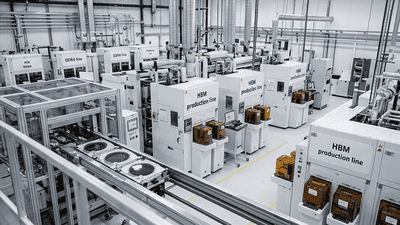
A manufacturer deciding to increase QLC participation must consider more than nominal wafer starts. Process readiness, yields, testing, customer qualification, and downstream integration determine usable output.
Product mix also matters. A wafer flow optimized for one product cannot always be redirected instantly to another without engineering work or commercial consequences.
The relevant allocation therefore includes capital, development resources, manufacturing time, and qualified output—not just a percentage of factory floor space.
From a producer’s perspective, the goal is profitable demand fulfillment. From an investor’s perspective, a higher QLC share is valuable only if it supports sustainable margins and cash generation rather than simply increasing reported bits.
More Layers and More Bits Are Complementary Levers

Layer count and bits per cell address different dimensions of density. A supplier can increase one, the other, or both.
These improvements can reinforce each other, but their manufacturing burdens also interact. A denser architecture needs to remain practical to fabricate, characterize, and qualify.
Recent QLC development illustrates that the contest is not limited to cell format. Kioxia and Sandisk’s 2026 technology announcement combined a 332-layer architecture with an optimized layout and claimed up to 60% higher bit density relative to the specified eighth-generation baseline. The improvement was not attributable to layer count alone.
For investors, this means comparisons need consistent generations and product types. A headline density advantage does not reveal the complete manufacturing cost structure.
The Controller Determines How Density Becomes Usable Storage
An enterprise SSD must manage its NAND through a controller and firmware. Error correction, data placement, wear management, and background operations contribute to the finished product’s behavior.
As cell-state management becomes more demanding, those functions become especially important. A component-level gain can create additional work for the system around it.
This does not eliminate the density advantage. It means the advantage has to be evaluated after the controller and firmware do their job.
From a storage engineer’s perspective, the deliverable is an SSD that meets workload requirements. From a manufacturer’s perspective, successful integration can differentiate a product beyond the nominal NAND type.
Endurance Must Be Measured at the Product Level
Broad statements that QLC has lower endurance than TLC identify a general design trade-off, but they do not provide a complete basis for choosing between finished drives.
Actual product endurance depends on the NAND generation, capacity, controller behavior, reserved space, and the stated workload assumptions.
A high-capacity drive can support a substantial absolute quantity of writes even when its allowed daily write rate is modest relative to capacity.
For buyers, the relevant comparison uses the drive’s specified endurance and the expected workload. Generic program-and-erase-cycle estimates should not replace that analysis, especially when different products and qualification conditions are involved.
Write Amplification Can Change the Economics
The amount written internally to NAND can exceed the amount written by the host. That difference affects wear and operating efficiency.
Workload characteristics and firmware behavior influence the relationship. Frequent small updates, background management, and available free space can produce different outcomes from a predominantly sequential workload.
This matters because a low acquisition cost can lose its advantage if the application consumes endurance rapidly or requires additional drives to meet performance targets.
The useful denominator is therefore usable work completed over the product’s intended life. Cost per raw bit is an input, not the final purchasing criterion.
Caching Helps—but Does Not Remove the Underlying Trade-Off
Some SSD designs use caching techniques to improve the handling of short bursts. Their behavior can differ when the workload continues beyond the available cache.
Other architectures manage writes differently. The implementation needs to be examined rather than inferred solely from the QLC label.
For an enterprise buyer, sustained behavior is often more informative than a short benchmark. Latency consistency and recovery after heavy activity can affect application performance.
For suppliers, this creates a reason to align product design with workload. A drive optimized for capacity-oriented reads should not be marketed as a universal replacement for a write-intensive product merely because it performs well in one test.
DDR5 Is Part of the System, Not an Alternative to NAND
DDR5 provides volatile working memory in server platforms. NAND provides persistent storage. Their roles are complementary rather than interchangeable.
A storage system can use working memory to buffer, organize, or accelerate operations, but that does not turn DDR5 into a substitute for the full persistent dataset.
Likewise, denser NAND does not automatically reduce the memory required by the application or storage software.
For an enterprise architecture, the objective is to balance memory, processing, and storage resources. A lower NAND cost per bit can be less valuable if the overall design requires disproportionate spending elsewhere to achieve the intended performance.
AI Creates Opportunities—and Demands Workload Discipline
AI infrastructure stores datasets, checkpoints, retrieval information, and other persistent data. Those activities create substantial capacity needs, but they do not share one access pattern.
Some applications are predominantly read-oriented. Others involve frequent updates or sustained writes. Product selection should follow that distinction.
QLC can be attractive where density and read performance align with the requirement. PLC’s future opportunity will depend on whether its capabilities fit a similarly identifiable set of workloads.
For investors, the phrase “AI storage” is not enough. The commercial thesis should identify which products are deployed, how customers use them, and whether the resulting economics justify repeat purchases.
High-Capacity Drives Change More Than the Price per Terabyte
Denser drives can reduce the number of devices required for a given raw capacity. That may affect server slots, rack space, power distribution, and management overhead.
But fewer drives can also change parallelism, failure recovery, and the amount of data associated with each device. The system implications depend on its design.
A capacity improvement therefore needs to be evaluated alongside redundancy, serviceability, and performance.
For a data-center operator, the useful metric is cost per usable capacity at the required service level. A larger drive is economically attractive when the complete system can absorb its characteristics without creating a new operational disadvantage.
Qualified Capacity Is the Commercial Bottleneck
Additional QLC output matters only when it can enter approved products and reach customers. Qualification links manufacturing capability with deployable supply.
The process includes more than confirming capacity. Customers need confidence in reliability, firmware, operating behavior, and integration with their platforms.
That work can delay the commercial benefit of a new generation. It can also create a valuable position for suppliers whose products are already accepted.
For PLC, qualification will be particularly important to distinguishing a promising concept from an enterprise-storage business. The density claim opens the discussion; repeat deployment establishes the result.
Why Lower Manufacturing Cost May Not Mean Lower Prices
Even when a technology improves production economics, selling prices depend on supply, demand, allocation, and the value customers place on the finished product.
A manufacturer can retain part of the efficiency gain, especially when qualified supply is tight. Customers may receive greater capacity or better system economics without an immediate proportional reduction in the purchase price.
The reverse is also possible: competition can pressure pricing before a producer has fully captured the manufacturing benefit.
For investors, cost curves and price forecasts should therefore remain separate. A density improvement can strengthen margins, support competitiveness, or be passed through to buyers—depending on market conditions.
What to Watch in the Allocation Race
A useful monitoring framework connects technology announcements with accepted output and customer economics.
- Track commercial QLC deployment separately from PLC development milestones.
- Compare density claims against clearly identified generations and cell formats.
- Examine manufacturing yields and qualified product output.
- Evaluate finished-drive endurance and sustained performance.
- Follow customer adoption and repeat orders by workload.
- Separate raw cost per bit from usable system cost.
These measures help identify whether a supplier is creating durable value or simply winning attention with a more ambitious specification.
The Race Is Won After the Cell
QLC has established a practical role in high-capacity enterprise storage. PLC offers a further density opportunity, but its commercial path still requires evidence of workable products, manufacturing economics, and customer acceptance.
The transition is not a simple contest between four and five bits. It involves layers, yields, controllers, firmware, workload behavior, and the surrounding DDR5-based system architecture.
The lasting advantage belongs to the supplier that turns denser cells into dependable, economical storage. Cost per bit starts the race. Cost per usable outcome determines the winner.