
ETFs

12 Consecutive Weeks of Net Inflows into Semi ETFs – The Smart Money Allocation Logic
Twelve straight weeks of net inflows into semiconductor ETFs is not just a flow statistic. It is a message. When money keeps moving into the same corner of the market week after week, investors should ask a deeper question: what is the allocation logic behind it? In semiconductors, inflows are rarely random. They usually reflect a mix of performance chasing, structural conviction, portfolio rebalancing, and a belief that the sector still has room to run. The interesting part is that all of those motives can coexist at the same time.

Assessing the Allocation Value of Newly Launched Thematic Semi ETFs (Equipment/Materials/HBM)
Semiconductor themed ETFs used to be simple. You bought a broad fund like SMH or SOXX, got exposure to the sector’s biggest names, and let the cycle do the work. That world is changing fast. A wave of newly launched tactical semi ETFs now targets very specific slices of the value chain: equipment, materials, and high‑bandwidth memory (HBM). Instead of “chips,” the story becomes “tools,” “chemistry,” and “memory bottlenecks.” The question for allocators is not whether these themes are interesting—they clearly are. The real question is whether these tactical ETFs add meaningful allocation value on top of traditional broad semi exposure.

Lead-Lag Relationship Between Global Semi ETF Flows and Korea Semi Export Data
The relationship between global semiconductor ETF flows and Korea’s semiconductor export data is a useful way to understand how market sentiment and real-world trade fundamentals interact. One side of the story is financial: money moving into and out of semiconductor ETFs around the world. The other side is industrial: the actual shipment of chips and chip-related products from one of the world’s most important semiconductor exporters. Put those together, and you get a compelling question. Do ETF flows lead Korea’s export data, or do exports lead ETF flows? The answer is not always the same, and that is what makes the relationship worth studying.
Market Sentiment Revealed by Changes in Semi ETF PCF Baskets
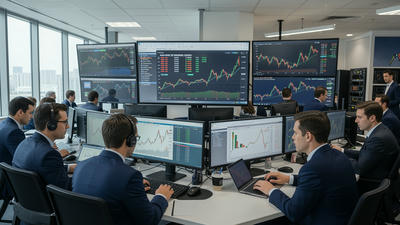
If you spend any time in the semiconductor space, you quickly realize that prices do not move only on earnings calls and product launches. They also move on flows, on mechanics, on the quiet, daily processes that keep exchange-traded funds running. One of the most important of those processes is the construction of the Portfolio Composition File, or PCF – the basket that authorized participants use to create and redeem ETF shares. When we talk about semi-themed ETFs, the evolution of those PCF baskets can be a surprisingly rich source of information about what the market is really thinking.

Options Protection for Semi ETFs – Empirical Cost-Benefit of Put Option Hedging
Semiconductor themed ETFs can deliver spectacular upside when the cycle is friendly, but they also carry a very real downside: sharp, sudden drawdowns when sentiment turns, earnings disappoint, or macro conditions tighten. Options, particularly put options, are one of the most direct ways to protect against those swings. The challenge is not whether puts work; they clearly do. The challenge is how to fit the cost of protection to the reality of the ETF’s behavior so you do not overpay for insurance or hedge at the wrong strikes and tenors.

Cross-Border Capital Flow Characteristics of Hong Kong and Mainland Semi ETFs
Semiconductor themed ETFs in Greater China sit at the crossroads of domestic industrial policy and global capital markets. Hong Kong-listed semi ETFs and mainland A-share semi ETFs both track the chip story, but they live in very different ecosystems. One operates as an offshore gateway for international money, the other as a domestic vehicle tied closely to onshore investor sentiment and policy guidance. When capital moves between the two, it reveals a lot about how investors view China’s semiconductor ambitions, risk, and opportunity at any given moment.

How OTC Investors Efficiently Access Semi ETFs via Feeder Funds
For many over-the-counter investors, semiconductor ETFs look attractive but feel inconvenient. The underlying products may be listed overseas, quoted in foreign currencies, or traded in markets that are not easy to access directly. That is where feeder funds come in. A feeder fund can act as a local gateway, allowing OTC investors to gain semiconductor ETF exposure without having to handle every cross-border detail themselves. In practical terms, it is a way to make global semiconductor investing more accessible, more familiar, and often more efficient.
Practical Grid Trading Strategies for Semi ETFs – Capturing Alpha in Wide Ranges
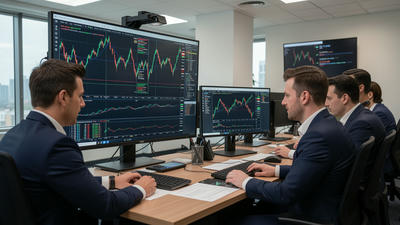
Semiconductor themed ETFs can trend relentlessly in bull phases, but they also spend plenty of time chopping sideways in wide, nerve‑racking ranges. Those wide ranges frustrate classic trend-followers but can be very friendly to traders who know how to harvest volatility. Grid trading is one of the simplest ways to do that. Done well, it treats price swings not as noise to be feared, but as raw material for systematic “buy low, sell high” across a pre‑defined band.

2027 Semi ETF Industry Outlook – Product Innovation and Investor Behavior Evolution
Semiconductor themed ETFs have already gone from obscure sector tools to core vehicles for expressing views on AI, cloud infrastructure, consumer electronics, and industrial automation. By 2027, that evolution is likely to be even more pronounced. Semi ETFs will sit at the intersection of product innovation in the ETF industry and shifting investor behavior in an increasingly factor- and outcome-driven world. The result will not just be “more semi ETFs.” It will be more specialized, more dynamic, and more integrated ways to trade and allocate around the semiconductor value chain.

Active Semi Funds vs. Passive ETFs – A Deep 1H 2026 Performance Review
The first half of 2026 gave semiconductor investors a very clear message: this is not a sector where you can afford to think in generic terms. The gap between active semiconductor funds and passive ETFs was shaped by more than just benchmark tracking. It was shaped by concentration, AI leadership, memory cycle shifts, foundry dynamics, and the ability of portfolio managers to react to fast-moving developments. In other words, the active-versus-passive debate became especially interesting in semis because the sector itself was moving so fast.